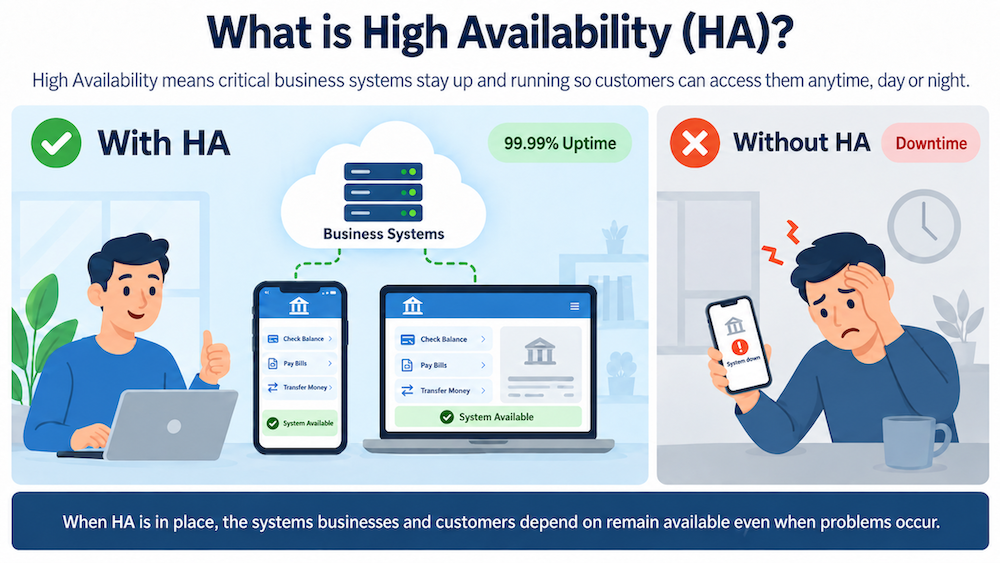
In this Enterprise Times article, Harry Aujla, partner alliance director at SIOS, examines why disaster recovery (DR) deserves as much strategic attention as high availability (HA) in protecting SAP environments and ensuring business continuity. He clarifies the differences between HA and DR, emphasizing that while HA aims to keep systems running during localized failures, DR focuses on restoring operations after major incidents such as cyberattacks or natural disasters.
The article outlines the business, financial, and regulatory risks of underinvesting in DR, then guides readers through two core recovery models, sitewide recovery and application-level recovery, highlighting the benefits, trade-offs, and cost considerations of each. Aujla concludes that there is no one-size-fits-all approach to SAP disaster recovery, urging organizations to align their strategy with business priorities, service-level requirements, and tolerance for downtime to build a resilient and practical recovery plan.