It was my sophomore year of high school. It was late on a Friday night, and like most teenagers, I was zoned out in front of the TV. Then, the glow of the screen was interrupted by my phone lighting up. A buzz. Then another. Then a relentless, vibrating chorus that could only mean one thing: Discord was blowing up, the support tickets were flooding in, and the servers were down. Again.
At that point, catastrophic downtime had practically become a feature of my daily life. Game hosting is the Wild West of infrastructure. Between targeted DDoS attacks from rival servers, inexperienced customers accidentally nuking their own configurations, and the inevitable hardware failures of budget bare-metal rigs, chaos was just part of the business model. While my classmates were worrying about biology tests, I was frantically SSH-ing into servers at 2 AM, praying a hard reboot would bring the nodes back online.
Eventually, that constant chaos started taking a heavy toll. Personally, the sheer burnout of being a one-man, 24/7 incident response team was exhausting. But from a business perspective, the bleeding was even worse. Every minute of downtime meant paying out SLA credits from a razor-thin margin. It meant hemorrhaging organic growth, losing prospective leads, and dealing with justifiably frustrated gamers. I was learning the hard way that downtime isn’t just a technical glitch; it is a massive financial liability.
I knew something had to change. I spent hours reading up on enterprise architecture, but as a solo teenager running a bootstrapped operation, my high availability strategy was essentially a collection of duct-tape bash scripts. I found ways to make rudimentary failovers work, but I could never get a reliable, affordable way to ensure true data replication. I eventually handed over the keys, selling the hosting business to a competitor just before trading my server racks for college lecture halls. But as I progressed through my degree, the operational scars of those frantic outages never faded. I couldn’t stop thinking about the infrastructure, the downtime, and the massive tech giants that effortlessly survived the exact failures that used to cripple my network. I worked relentlessly to understand that gap, which ultimately drove me to land my internship here at SIOS.
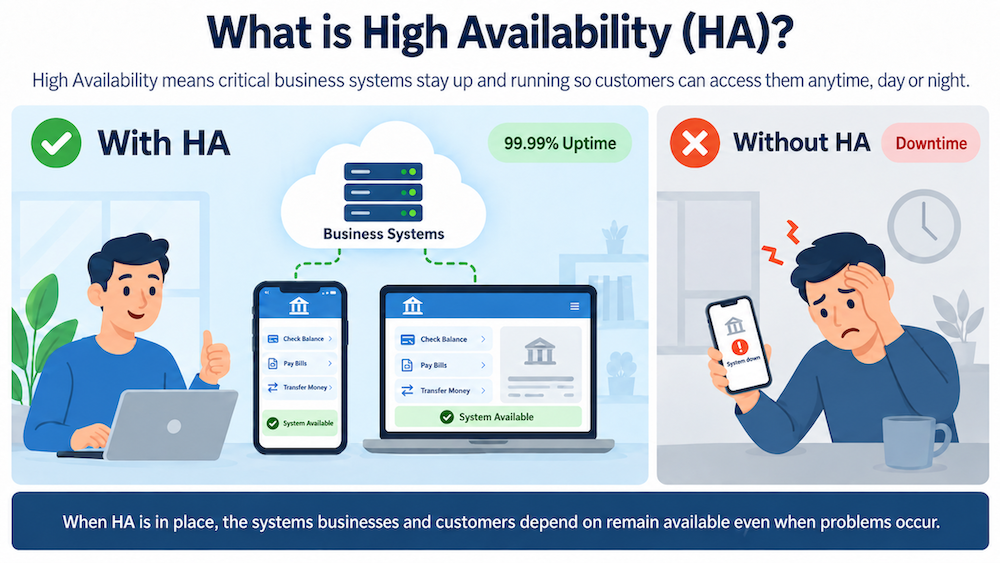
Walking into this engineering environment felt like stepping into an alternate reality where my teenage infrastructure nightmares had already been solved. When I first saw SIOS DataKeeper in action, it was a genuine moment of awe. It was exactly what I had been searching for all those years ago. Watching edits on one machine move to another seamlessly, and then just work exactly as intended during a simulated failover, was incredible. Seeing how effortlessly it integrates with everything else to make downtime a thing of the past proved to me that the perfect infrastructure I used to dream about actually exists.
Today, my role bridges the gap between my scrappy roots and elite industry standards. I am directly on the front lines in tech support, ensuring our software and our customers’ architectures run flawlessly. Every single day, I get to help businesses keep their mission-critical data online. There is an incredibly profound, full-circle satisfaction I feel in that. When I help a customer smooth out their high availability setup, I think back to that solo teenager scrambling in the dark on a Friday night. It is an absolutely amazing feeling to know I am no longer just wishing for a safety net. I am actively helping other businesses make rock-solid, panic-free infrastructure a reality.
Author: Brit Weinstein, Customer Experience Engineer Intern at SIOS