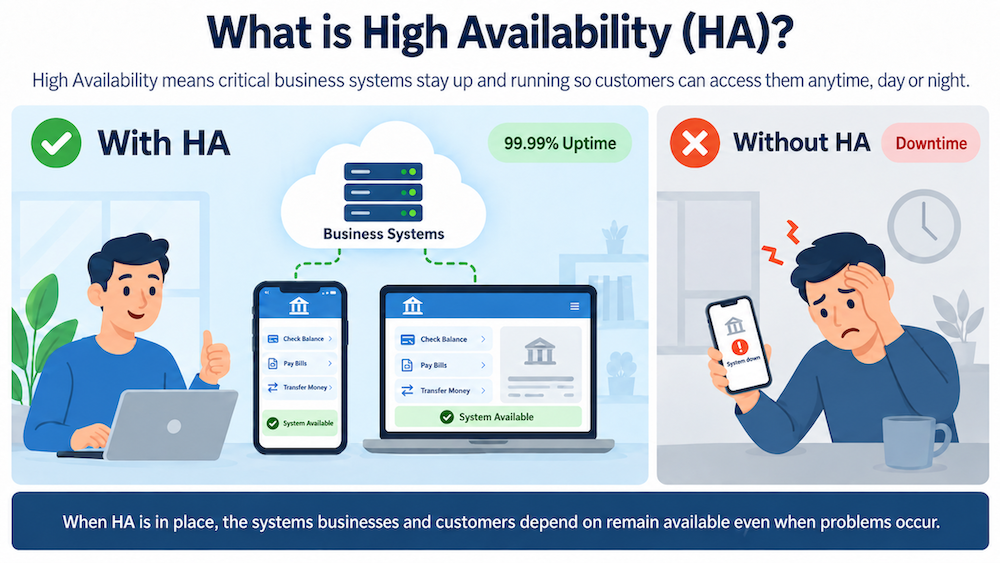
In the world of IT infrastructure, uptime is everything. Keeping your users online and functional is the foundation on which most modern businesses run. In a world where downtime is the supervillain, clustering becomes the hero who can save your business from disaster. However, as the title states, “with great power comes great responsibility.” Similar to how heroes of fiction must control their powers to ensure they are not abused or misused, clusters (and the engineers working on them) must be controlled to ensure they are able to save the day when disaster does strike. In this blog, we will discuss some general best practices to keep your cluster prepared to battle a disaster situation. Just like a protagonist, it all starts with the training and maintenance.
Storage Changes in a Clustered Environment
Clusters are a powerful tool; with that power comes additional restrictions that a single system setup does not need to consider. When maintaining your clustered system, you must perform additional validation beyond what is needed for a basic system. For example, provisioning additional storage is a few clicks away through a cloud provider console; however, in a clustered environment, you do not want to jump the gun. A clustered environment with mirrored data will have much stricter requirements for storage than your typical server. Understanding this and how to work with clustered storage is key to ensuring your cluster stays at full strength 24/7. For a detailed overview of proper storage procedures, please feel free to review this technical document:
Beyond storage, there are further cluster considerations that you should arm your engineers with. Understanding the interplay between clustering and antivirus is key to preventing unwanted quarantine of critical clustering files/processes. Properly documenting system updates and ensuring clustered nodes remain consistent allows for all changes to be well understood by current and future engineers, and prevents problems that may stem from node inconsistencies.
Antivirus Software, Malware, etc. Exclusions for DataKeeper for Windows
Network Changes and Mirror Endpoints
Another major factor in clustering is networking. In order for a cluster to communicate, the network must function properly, and the configured addresses must stay consistent. In a single server environment, changing network infrastructure hardly comes into play, but when working with a clustered setup, all of the nodes must maintain communication on dedicated network paths, and changing those paths requires that you update the cluster configuration. SIOS does provide tools to update these values, but it is important to understand the procedure prior to making any changes.
Learn more about changing mirror end points, here.
To summarize, going from a standard single server setup to a “superhero” cluster is not an instant hands-free solution. Just like any superhero, it requires proper training and maintenance to perform at a “super” level. Careful considerations around any storage, networking, AV, and other system changes will allow for your cluster to stay in tip-top shape to save your clients and business from the wrath of downtime. For further information and training, please feel free to review more blogs, visit our documentation site, complete our online training, or reach out to support@us.sios.com if you are interested in procuring a more comprehensive synchronous training session with a dedicated SIOS engineer.
Author: Connor Toohey, Sr. Product Support Engineer at SIOS Technology