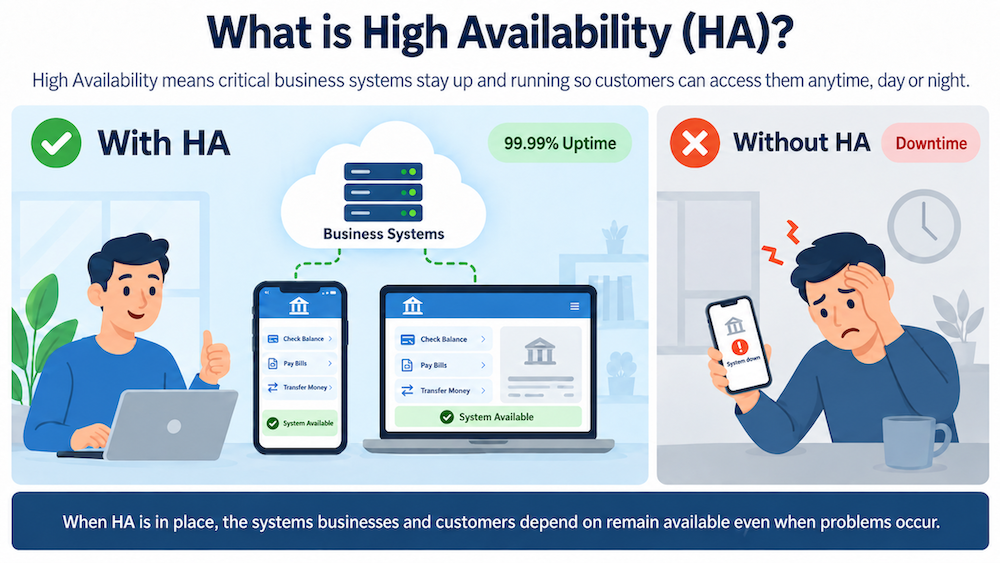
For IT teams managing modern applications and maintaining high availability while rolling out updates can be a challenge. An integral piece to achieving reliability is the separation of Quality Assurance (QA) and production environments. While it may seem like a trivial practice, it is important for catching potential issues and instilling confidence for maintenance tasks.
QA Environments as the Testing Ground for High Availability
The QA environment serves as a replica of the production environment. This provides a sandbox where new features, configuration changes, and patches can be thoroughly tested. Beyond functional testing, a QA environment allows for process validation, performance benchmarking, load testing, and security validation.
These are critical activities for identifying bottlenecks, vulnerabilities, or integration issues before they have the chance to impact end users or compromise your environment. For distributed systems or cloud architectures, QA environments can help simulate network latency, database replication delays, and other operational edge cases that can disrupt business operations if not tested.
Production Environments and the End-User Experience
The production environment is where end users rely on systems to perform consistently. Any unplanned downtime or failure can have direct business consequences, from lost revenue to reputational damage.
By keeping production isolated from ongoing development and testing, IT teams can ensure operational stability. Properly configured production environments should include redundancy strategies, failover mechanisms, and monitoring tools that were validated through testing in the QA environment before deployment.
Smooth Transitions Through Structured Deployment Pipelines
High availability doesn’t have to be just about keeping systems up. It can include making updates predictable. QA environments can support structured deployment pipelines, enabling various strategies like staged rollouts and blue-green releases. Rollback procedures, pre-validated in QA, allow teams to recover quickly if unexpected issues arise. A structured approach makes updates predictable and helps maintain customer trust.
Operational Benefits of Separating QA and Production Environments
Having separate QA and production environments can also support compliance, audit readiness, and cross-team coordination. Clear boundaries between testing and live systems can help operations and development collaborate efficiently. It also helps provide a repeatable framework for monitoring, troubleshooting, and disaster recovery planning.
QA and Production Environments in a High Availability Strategy
QA and production environments play a vital role in keeping systems running smoothly. By keeping environments separate, testing thoroughly, and managing deployments carefully, IT teams can reduce downtime, maintain high availability, and make transitions between updates seamless. These practices help ensure systems stay dependable and resilient as they evolve.
Ready to improve high availability across QA and production environments? Request a demo to see how SIOS helps teams deploy updates confidently and keep critical systems running.
Author: Tristan Allen, Associate Customer Experience Software Engineer at SIOS Technology