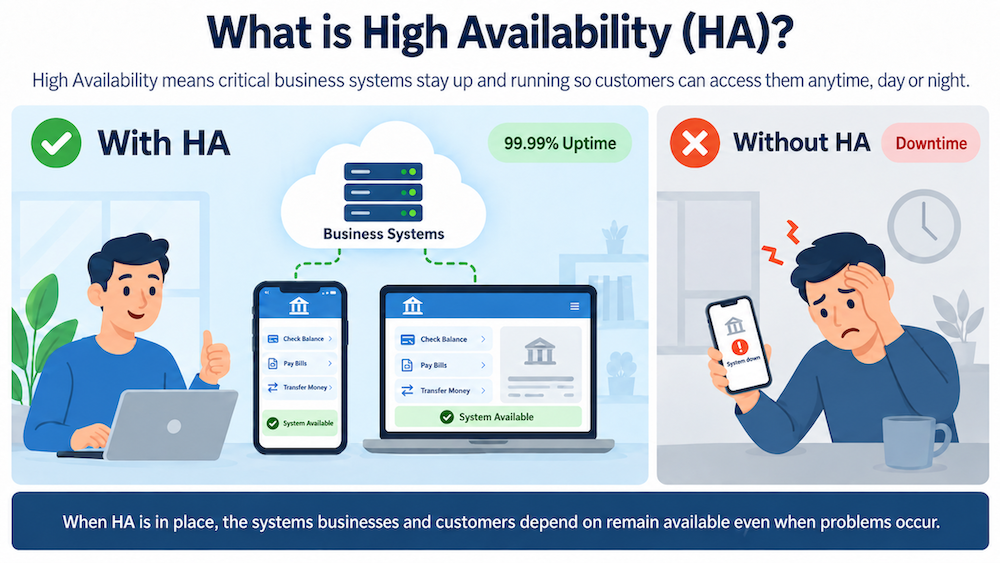
In manufacturing, ERP systems and databases like SAP, SAP HANA, Oracle Database, and SQL Server manage various processes throughout their operations. One of the challenges with this is downtime of any of these operations can be disruptive, even if only for a few minutes, not only for that particular operation but for others too. One of the most common ways to protect these workloads is using failover clustering.
In this video interview with TFiR, SIOS’ Ian Allton discusses high availability considerations for the manufacturing industry. He explains that one of the reasons why ‘failover clustering’ is the most common way to protect workloads is because it is cost-efficient and delivers upwards of 99.99% availability. Failover clustering software works by configuring a second server with the same specifications as the primary server, and then the failover clustering software monitors the operating system and the application. Should it detect an error or issue, it will failover the software from the primary server to the secondary server, avoiding an outage. Contact us for more information.
Tune in to this episode to learn more about how to avoid downtime.