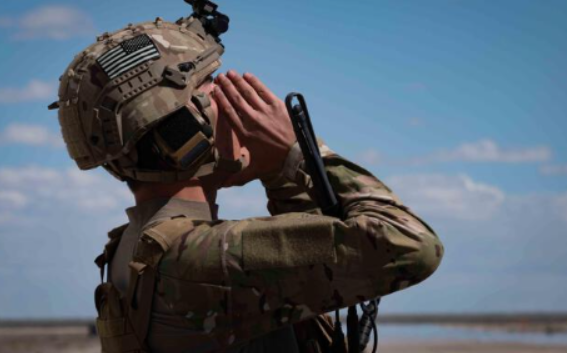
When I was a Marine serving with a Tank Battalion, I remember that we’d all prepared ourselves to hear “FIRE IN THE HOLE” just before we shot a projectile. Even if you did not hear others yell this, we had radios/coms, hand/arm signals, flags, flares, etc. indicating that all things were “a go” and the projectile was headed down range. We all knew that communication was essential.
The Importance of Communication in Cluster Storage Resizing
If you are Database Administrator, Server Engineer or an IT generalist responsible for the health of the application resources on your cluster (DataKeeper storage), communication is essential for you too. For example, how do you notify others about your efforts to scale your storage? To be successful, it’s likely you are going to need to communicate with several other members of your team about a wide range of topics, related to your Source and Target Volumes, including:
- Do you need more space?
- Do you need to change your disk type from Basic to Dynamic?
- MBR (Master Boot Record) or GPT (GUID Partition Table)?
- Unit Allocation Size?
- Other
Who on your team will yell “FIRE IN THE HOLE” when it’s time to provision your existing DataKeeper Mirror(s)? Don’t you want to be notified before and after?
Key Steps for Coordinating DataKeeper Storage Resizing
Your DataKeeper Storage requires a few things that need to be communicated to all stakeholders; internally or externally (hosted):
- Preparation:
- Have all the departments been notified of the said actions that will take place?
- Databases, Networking, Security, Applications, Client Services, etc.
- Have the steps been provided for resizing?
- Have those steps been shared with stakeholders that are impacted?
- Have all the departments been notified of the said actions that will take place?
- Staging:
- Has the environment been “prepped” with the required resources?
- How much new storage is needed?
- Will the volume attributes remain the same i.e. Unit Allocation Size, MBR/GPT to name a few . . .
- Has the environment been “prepped” with the required resources?
- Execution:
- Final walk through . . .
- All of the requirements have been gathered/reviewed again . . . via Preparation, Staging, etc
- Final walk through . . .
Marine: “Are you ready?”
Other Marines: “Yes!” (There is some swearing of course, WE ARE MARINES! LOL)
Marine: “FIRE IN THE HOLE”
DataKeeper Administrator: “Pause and Unlock Mirror” aka “FIRE IN THE HOLE”
- Greg Tucker, Sr. Product Support Engineer, SIOS Technology Corp.
Ready to optimize your storage for high availability? Connect with SIOS experts today to ensure your cluster resizing is smooth, efficient, and built to scale.